Designing for AI Visibility
Context
AI search changed what it means to be visible
For years, brands could measure search visibility through rankings, impressions, and traffic. AI generated answers changed that model. Content could shape an answer without users ever visiting or even seeing the source.
I led design for a new AI Visibility product area in Microsoft Clarity, taking the work from early definition through GA. The challenge was bigger than introducing new metrics. We had to make an unfamiliar category understandable and useful inside an existing analytics product.
The challenge
From emerging problem to product direction
Foundational research captured the core user problem:
“My content is shaping AI answers, but I can’t see it, measure it, or monetize it, and traffic alone no longer tells the story.”
Users wanted to understand whether AI systems were using their content, how their visibility was changing, how they compared with competitors, and where opportunities existed to improve.
At the same time, we were designing in a category that was still forming, with no established user mental model, limited product precedent, and rapidly evolving requirements.
What I designed
Designing the core experience
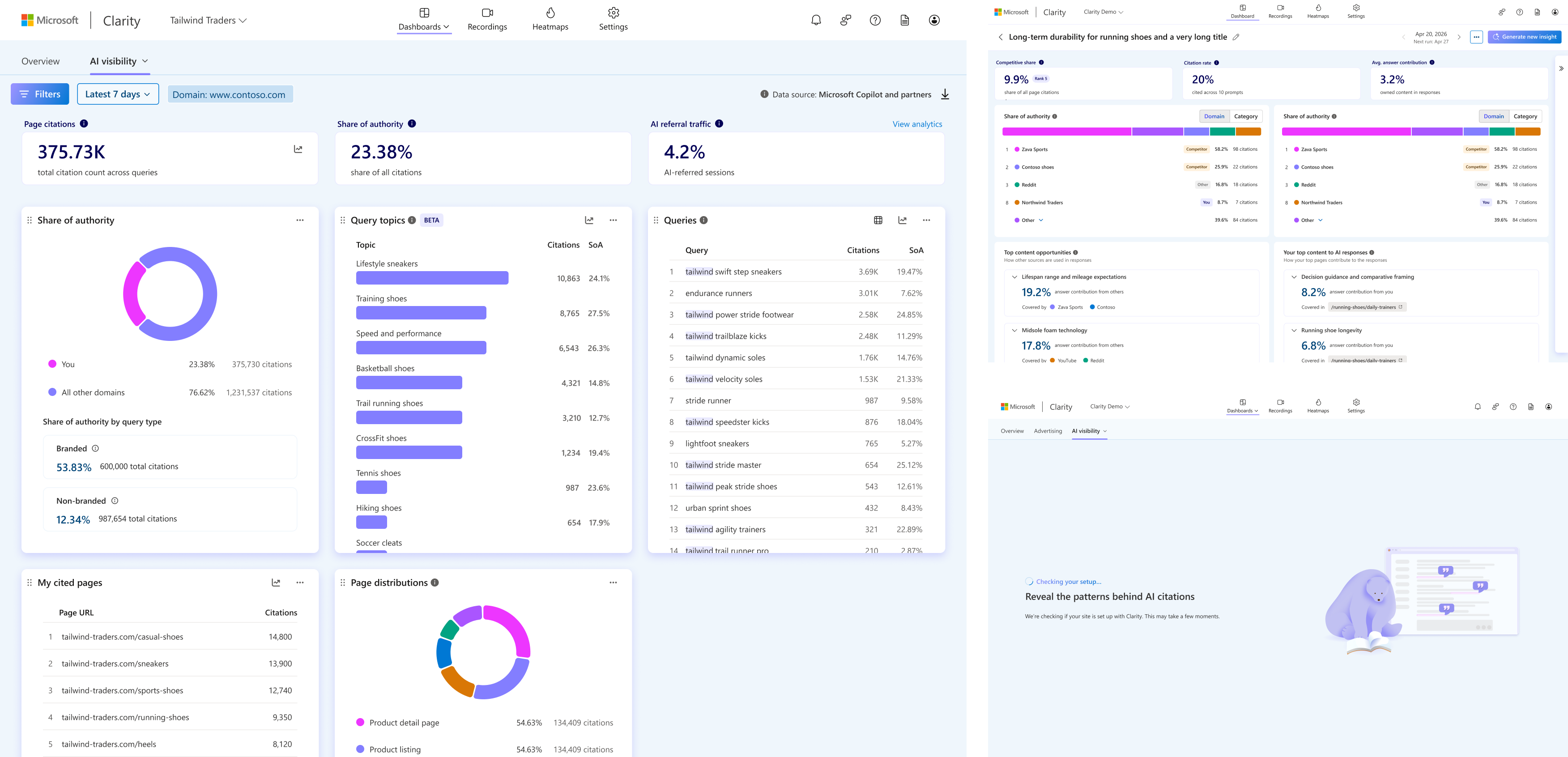
I focused on two core AI Visibility experiences: helping users see where their content is used in AI answers and understand performance around the topics they care about. I also designed the onboarding experience to get users there.
Citations: Making AI visibility legible
I translated unfamiliar signals such as citations, share of authority, attribution, and AI referral traffic into a scannable dashboard answering a simple question: when and how does my content appear in AI answers?
I structured the experience around a clear summary layer for quick interpretation, while preserving deeper analysis for users who needed it.
Topic Insights: Turning visibility into competitive understanding
Knowing whether a brand was cited was only the beginning. Users also needed to understand their performance around the topics they cared about and why competitors were appearing instead.
I designed Topic Insights around user defined prompts, allowing users to analyze citation performance for a topic, compare their visibility with competitors, and investigate the questions and pages driving those results. The experience helps users understand:
- How they compare — compare how often their content is cited with competitors.
- What is driving visibility — find the questions that surface their content and identify where competitors are being cited instead.
- Where opportunities exist — identify the pages and content areas with the strongest potential to improve visibility.
Onboarding: Getting users to value quickly
AI Visibility required users to complete domain setup before accessing the full experience, creating friction before they could see value.
I designed the verification and first run experience to keep setup lightweight and connected to the dashboard, helping users understand what was required and reach AI Visibility insights quickly.
Impact
From an emerging idea to a strategic product area
The work moved beyond initial validation into meaningful adoption, stronger engagement, and broader organizational investment.
Business impact
Organizational impact
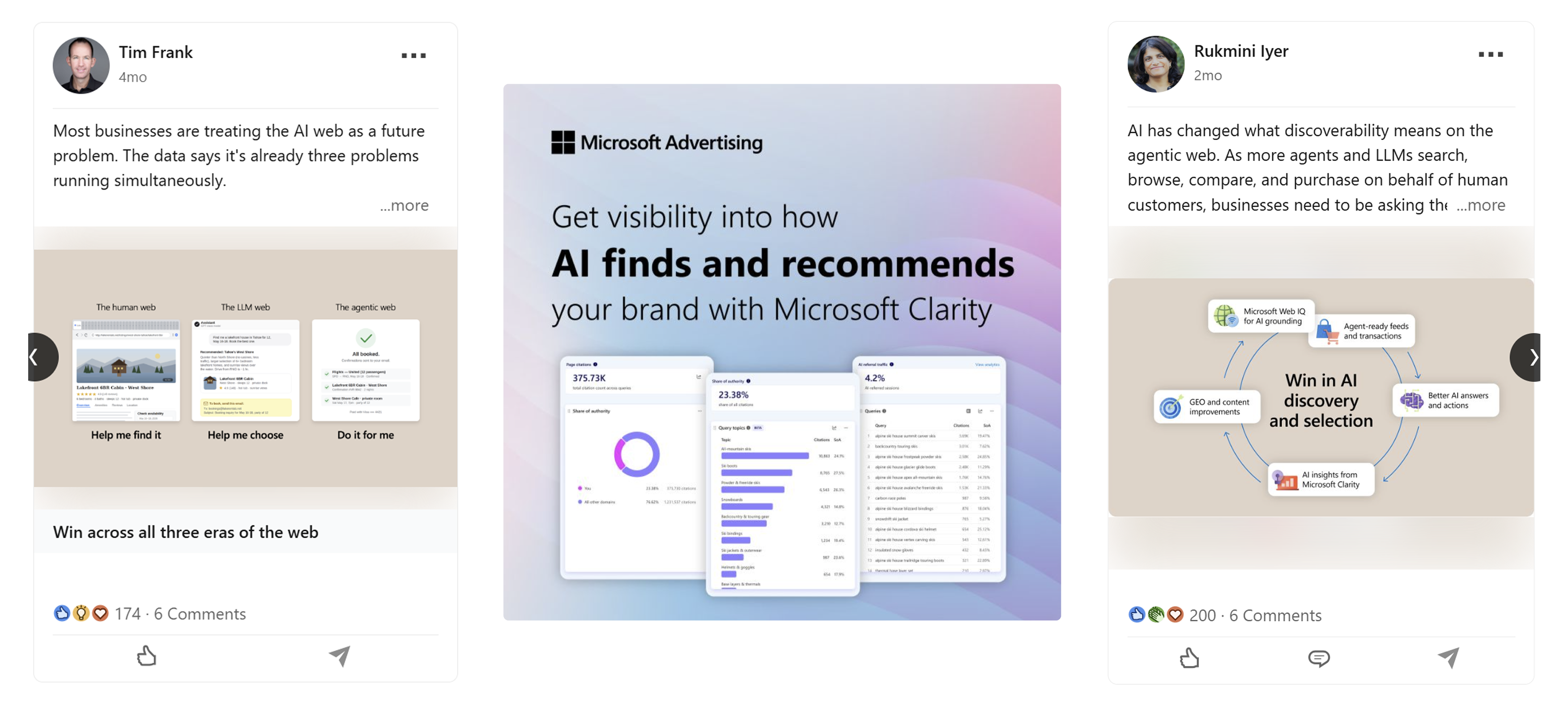
AI Visibility grew from an early product bet into one of the organization’s strategic priorities, with the work highlighted in public product and engineering leadership communications.
I was also named a subject matter expert supporting the industry body defining AI visibility measurement standards and nominated for an internal impact award for design leadership.
User response
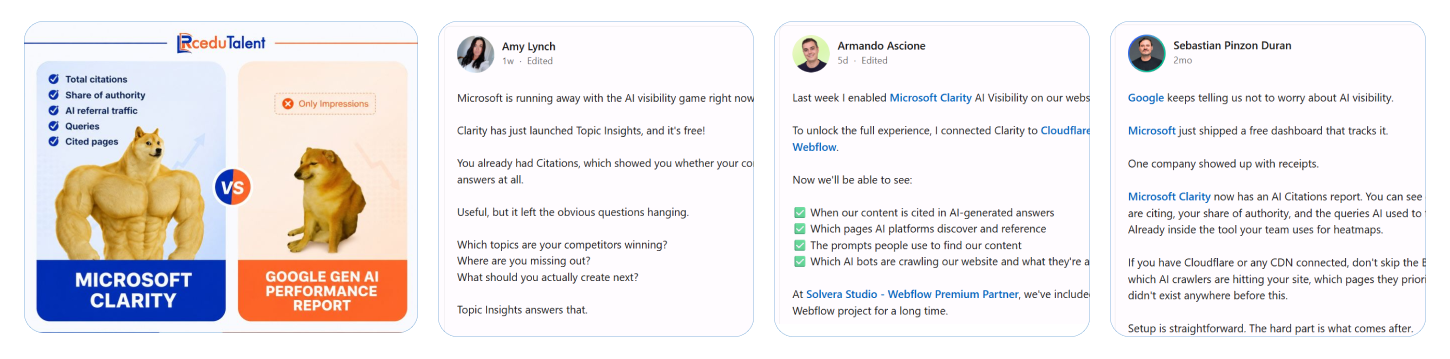
The features also began generating strong reactions from Clarity users as the product reached the market.
The biggest design challenge was not any single dashboard. It was turning an emerging, poorly understood problem space into a product model users could understand and a foundation the team could continue building on.